Home
|
by Jan Lundberg
|
|
For whatever its accomplishments and intricacies, Western Civilization has been based on (1) the exploitation of people and the environment, and (2) the attempt of constant expansion -- geographically, quantitatively, and in the mind.
This expression has had such a long run that it has comprised all conventional history. All the while, civilization as top-down exploitation and expansion has been ratcheting up spectacularly, especially in recent decades, despite -- and partly because of -- fast-shrinking resource limits. Climate instability is barely beginning to act as a brake.
The relatively slow process of civilization's march via exploitation and expansion has finally graduated and adapted to something unanticipated little over a century ago: mass consumption.
|
|
|
by Jan Lundberg
|
|
The U.S. holiday Labor Day is a joke. Any day off is welcome, of course. However, again there will be no visible strikes and no muscle-flexing by the labor movement. Observance of Labor Day is as if having to be either over-worked or unemployed, putting up with extreme income disparity, tolerating insanely onerous student debt, forced to contribute to environmental degradation and unabated military madness, are non-existent issues in the "real world."
The non-labor orientation of our political reality has a lot to do with the loss of May Day (May 1st) in the U.S. as a workers' show of force and rallying tool. This is ironic when the world picked up on it big time, honoring it to this day, almost a century and a half after the U.S. anarchist labor movement created it. |
|
|
by Jan Lundberg
|
From New York City and the region's young farmer movement:
 Hear the half-hour show now at heritageradionetwork.org Greenhorns Radio, Episode 197, guest Jan Lundberg. Host: Severine Fleming, Director of Greenhorns.
Background for Sail Transport Network readers: Greenhorns partnered with the Vermont Sail Freight Project when it made its historic voyage down the Hudson River bringing food cargo last year. |
|
|
by SAIL MED
|
 In the fall of 2013, a dedicated group from Greece, the Netherlands and the U.S.A. formed a consortium - SAIL MED - to promote clean, renewable-energy transport (by sail) in the Mediterranean Sea region. With the EU-funded North Sea consortium "SAIL" now completing its mission to design a 150-meter Ecoliner, SAIL MED aims to further promote hybrid-sail cargo vessels for southern Europe.
|
|
|
by Adam Barney
|
|
Adam Barney's report from the front lines of drug rehabilitation, Florida Beach Rehab, takes a national policy view of main aspects of substance abuse. Culture Change's editorial commentary on healing and on hemp follows this post. - ed.
Uruguay made a groundbreaking legislative change in 2013 when the nation legalized the growth, sale, and consumption of marijuana all at once. That monumental change appears to have accelerated the legalization of the plant across parts of the U.S., which has subsequently reduced much of the stigma attached to marijuana. |
|
|
by Jan Lundberg
|
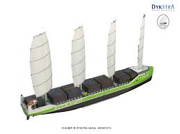 Everyone knows this is the next development in shipping, but who will take the lead? This is the feeling shared amongst everyone in on the movement, especially during and after the recent Harlingen, Holland meeting of organizations and activists interested in the Ecoliner -- a hybrid sailing ship designed for timely delivery of cargo with minimized pollution. Attendees were inspired by 65 tall ships gathered in Harlingen for a race and public outreach extravaganza.
|
|
|
by Jan Lundberg
|
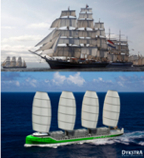 July 4th this year means something different to me than if I had stayed in the U.S. I'm honored to be asked to visit the small but brave, Frisian harbor town of Harlingen which is about to present the Tall Ships Race of 2014. The photo below says it all.
The foundation Harlingen Sail, the municipality of Harlingen and the province of Fryslân are hosting the race that involves several nearby countries. A feast for the eyes, it is also a training opportunity for many young sailors.
|
|
|
by Simon Ross, Population Matters
|
 Having a small family is the most important individual contribution we can make to a sustainable future Having a small family is the most important individual contribution we can make to a sustainable future
Human population growth is a major driver of unsustainable consumption levels. Like any issue, it has its pessimists and optimists. Pessimists point to the doubling of human numbers over the last half century and the projected addition of a further 50% or some 3.5 billion by the end of the century. Optimists point to the fall in the birth rate by one third over the last fifty years and that over half of the world’s citizens now live in countries at or below fertility replacement rate. |
|
|
by Jan Lundberg
|
 Occupying UC Berkeley land
And they never really went away.
|
|
|
by John Lewallen
|
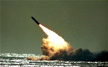 As the United States engages in economic warfare with Russia over the fate of the Ukraine, and continues the escalating encirclement of Russia and China with nuclear and other weapons designed to carry out a nuclear first-strike against these nations, it’s time for all of us to take a close look at U.S. nuclear weapons strategy. Is the current U.S. nuclear strategy of seeking nuclear weapons dominance by developing and deploying weapons which increasingly threaten Russia and China with a nuclear first-strike protecting the United States? Or, is the relentlessly escalating threat of surprise nuclear attack against Russia and China forcing their nuclear commanders to prepare to strike the United States with a preemptive nuclear attack? As the United States engages in economic warfare with Russia over the fate of the Ukraine, and continues the escalating encirclement of Russia and China with nuclear and other weapons designed to carry out a nuclear first-strike against these nations, it’s time for all of us to take a close look at U.S. nuclear weapons strategy. Is the current U.S. nuclear strategy of seeking nuclear weapons dominance by developing and deploying weapons which increasingly threaten Russia and China with a nuclear first-strike protecting the United States? Or, is the relentlessly escalating threat of surprise nuclear attack against Russia and China forcing their nuclear commanders to prepare to strike the United States with a preemptive nuclear attack? |
|
|
by Jan Lundberg
|
 Are we the last generation of humans, as claimed by speaker and writer Guy McPherson? Are we the last generation of humans, as claimed by speaker and writer Guy McPherson?
So-called balance is exercised by the some corporate news media, catering mainly to science skeptics, to allow denial of human-generated global-warming. But there is a true balance to be met: while the progressive, science-minded alternative press does not reflect total gloom and doom, critics see this as denial of our near-term extinction. Balance in coverage must be between predicting near-term extinction from multiple climate forcings versus science-based consideration of separate, known factors in global warming that even together do not indicate runaway greenhouse effects beyond the IPCC's worst case.
|
|
|
by Jan Lundberg
|
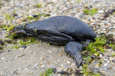 The world appears far from getting a grip on world oil-fueled shipping. The ongoing consequences are well known, but periodic disasters get our attention. A collision and spill of at least 168,000 gallons of marine fuel happened on March 22 near Houston, Texas. It closed a major petrochemical shipping route.
Each spill, we have seen over the decades, does practically nothing to stop the next one, and the next one. News items surface for a couple of days, only to disappear unless there was dramatic loss of human life. The public's glimpse of every major pollution event is fleeting, while the polluting interests and impotent "relevant" government agencies carry on.
|
|
| << Start < Prev 1 . 2 . 3 . 4 . 5 . 6 . 7 . 8 . 9 . 10 . Next > End >>
|
|
|
|




